Handcrafted in Vietnam
Collection: Ombré Silk Scarves
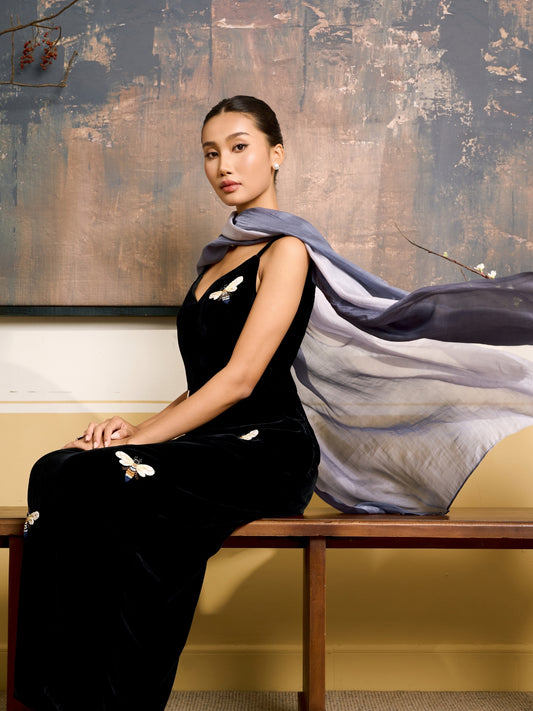
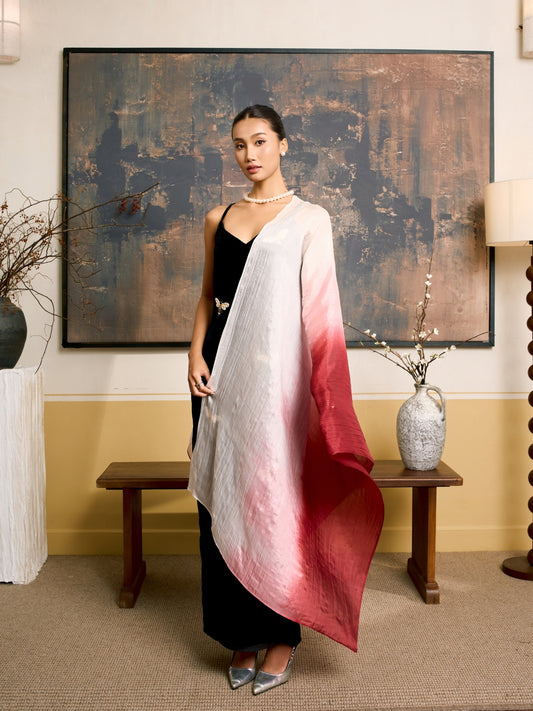
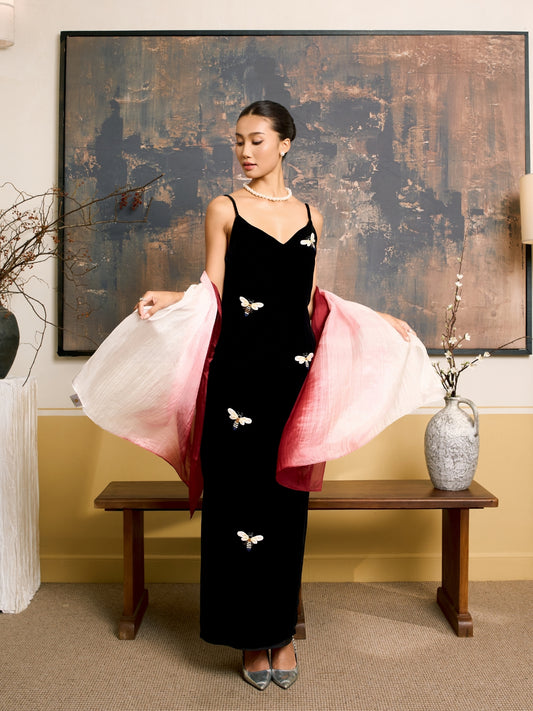
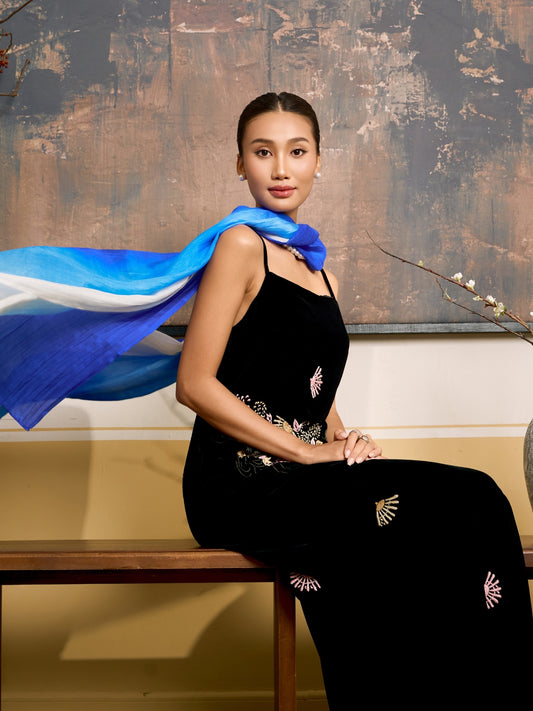
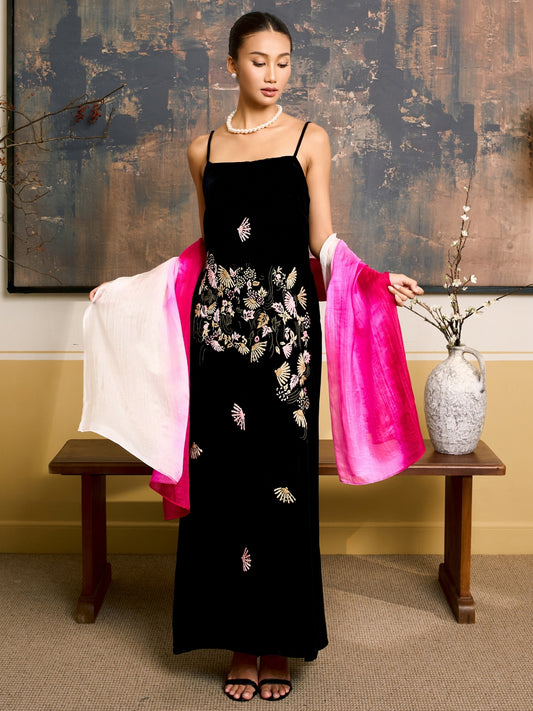
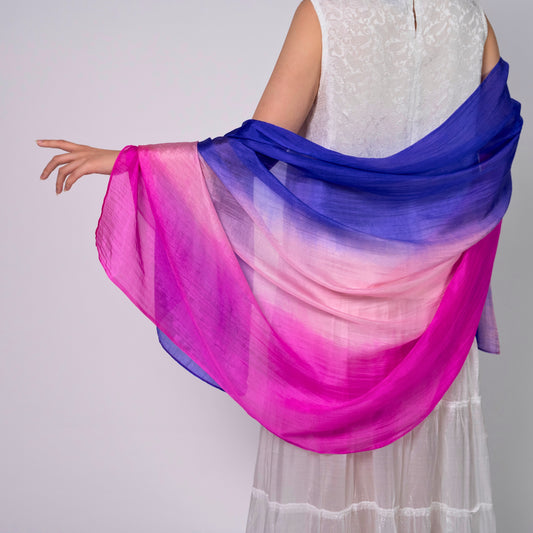
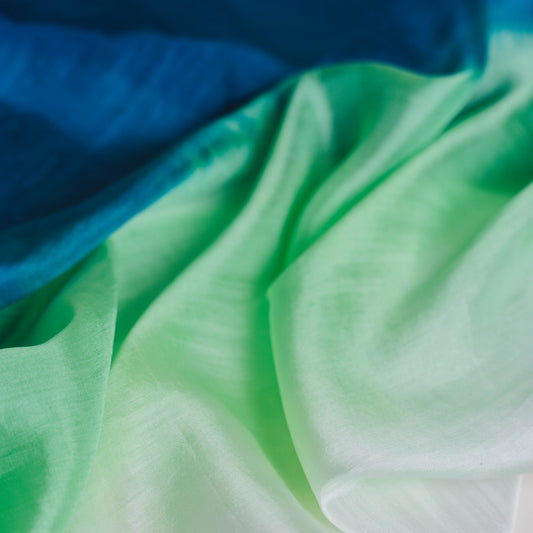
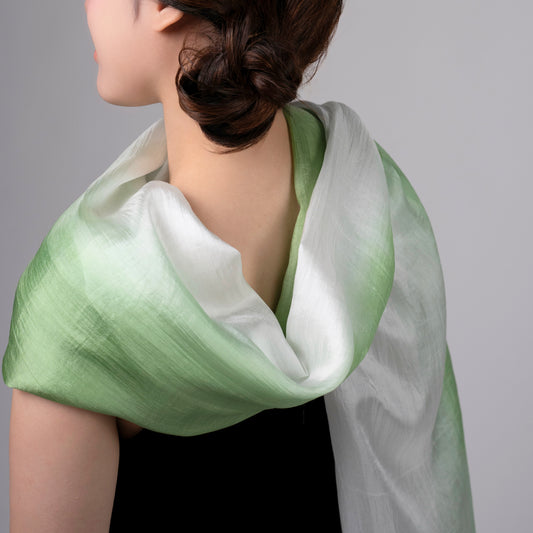
A slow gradient of colour. To create our ombré scarves, artisans dip pure mulberry silk by hand, drawing one shade gently into the next. The effect is subtle and atmospheric — a wash of tone that catches the light as you move. Each piece is finished with hand-rolled edges, a small detail that speaks of unhurried, traditional craftsmanship.
Why ombré is harder than it looks. A printed gradient is applied to the surface of a finished cloth in a single pass. A dip-dyed one is built in stages: the silk is lowered into the dye bath, held, lifted a little, held again, and lifted again, so that the part submerged longest takes the deepest colour. The transition has no edge because there was never a moment when the dye stopped and started — only time and depth. It also means no two scarves in this collection are identical, and none can be exactly repeated once the dye lot is gone.
Choosing one. An ombré gives you two scarves in one piece: fold it to show the pale end against your face, or the saturated end for evening. That makes them particularly useful for weddings and occasions, where the same wrap needs to work in daylight photographs and again after dark. The lighter end sits closest to the skin and is the more flattering choice for most complexions.
All of our ombré scarves are woven in habotai — the fine, fluid plain weave that takes hand-dyeing most beautifully. If you would like to understand what that means on a label, we explain it in full in Habotai Silk vs Mulberry Silk. And if you are wondering how to keep one looking its best, our guide to getting creases out of silk covers it.